Commercial Kitchen Fire Prevention Guide
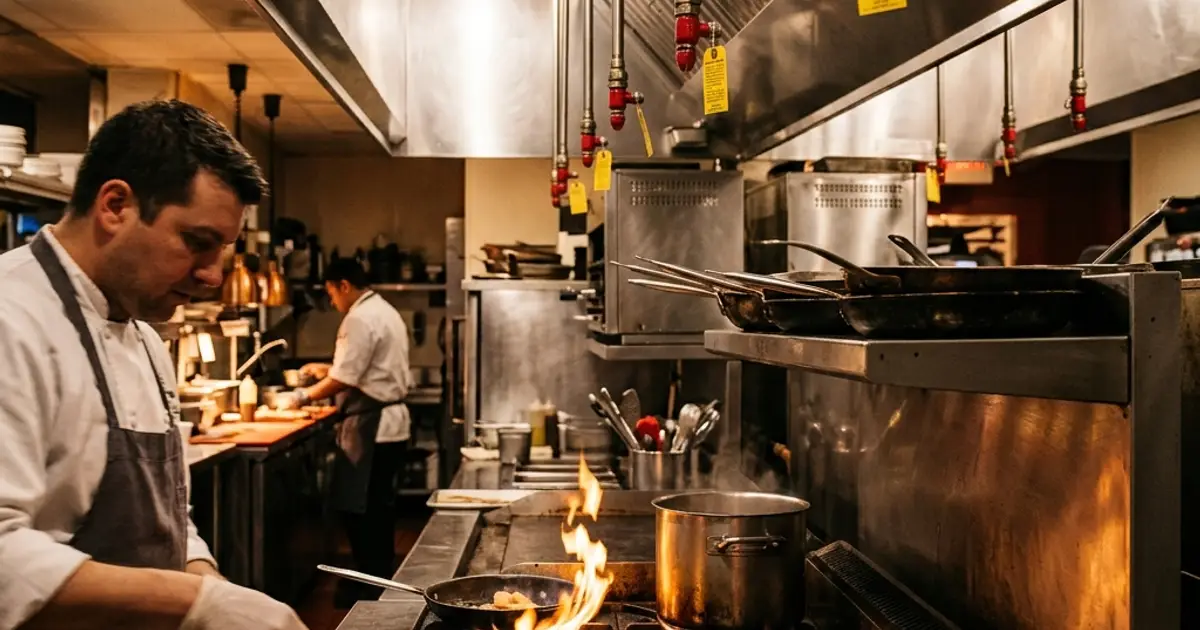
Commercial kitchen fires cause an estimated $246 million in property damage annually in the United States. The majority are caused by grease buildup in exhaust systems -- the exact risk that regular hood cleaning eliminates. This guide covers the statistics, how grease fires start, how professional hood cleaning and fire suppression systems protect your kitchen, and what every restaurant owner should do right now to reduce fire risk.
1. Kitchen Fire Statistics
Commercial kitchen fires are one of the most costly and preventable disasters facing the restaurant industry. According to the National Fire Protection Association and the U.S. Fire Administration, cooking equipment is the leading cause of fires in eating and drinking establishments -- and the overwhelming majority of those fires originate from accumulated grease in exhaust systems that were not cleaned on schedule.
Commercial Kitchen Fire Facts
$246M
Annual property damage from commercial kitchen fires in the U.S.
~7,400
Reported structure fires in eating and drinking establishments annually
115+
Civilian injuries reported each year from restaurant fires
61%
Of restaurant fires attributed to cooking equipment and grease accumulation
Sources: NFPA Research, U.S. Fire Administration (USFA) restaurant fire reports.
Beyond the raw numbers, fires force extended closures that can put restaurants out of business permanently. Insurance claims are frequently denied when operators cannot demonstrate NFPA 96 compliance -- meaning a preventable fire becomes both a physical and financial catastrophe. The good news: the majority of these fires are preventable through a consistent maintenance program.
2. How Grease Fires Start
Understanding how grease fires ignite inside exhaust systems is essential for appreciating why regular cleaning is non-negotiable. Every time cooking equipment operates, it generates grease-laden vapor -- tiny airborne droplets of fat, oil, and combustible particles that rise with the heat. The exhaust hood captures these vapors and draws them up through the ductwork to the rooftop exhaust fan.
As grease vapor travels through the exhaust system, droplets cool and condense on every interior surface: the hood filters, the inner walls of the ducts, the plenum above the filters, the exhaust fan blades, and the fan housing. Over weeks and months, these deposits build into a thick, sticky layer of highly flammable material. Cooking grease has an autoignition temperature between 400 and 700 degrees Fahrenheit depending on the oil type -- temperatures routinely reached on commercial cooking surfaces.
Once grease inside the exhaust system ignites, the fire travels up the ductwork rapidly -- often reaching the rooftop fan and beyond within minutes. Duct fires are extraordinarily difficult to suppress because they occur inside enclosed metal channels that are inaccessible to traditional firefighting. The exhaust fan, if running, actively pulls the fire upward and feeds it with oxygen. Structural fires in the ceiling, attic, or adjacent spaces frequently result.
The ignition sources are everywhere in a commercial kitchen: open burner flames that flare up unexpectedly, a momentary equipment malfunction, overheated cooking oil in a deep fryer, or a grease flash fire on a charbroiler. Any of these can send a flame or spark into the hood opening, where waiting grease deposits ignite instantly. This is why NFPA 96 (the National Fire Protection Association Standard 96 -- Standard for Ventilation Control and Fire Protection of Commercial Cooking Operations) mandates that grease never be allowed to accumulate beyond a defined threshold inside any exhaust system component.
3. The Role of Hood Cleaning
Professional hood cleaning is the single most effective measure for preventing grease fires in commercial kitchens. A thorough cleaning removes accumulated grease from every component of the exhaust system -- hood filters, hood interior surfaces, grease trays, ductwork from the plenum to the fan, the exhaust fan blades, fan housing, and the rooftop grease containment system. When grease is removed, the fuel source for a duct fire is eliminated.
The NFPA 96 connection is direct: Chapter 11 of NFPA 96 sets legally enforceable cleaning schedules based on cooking volume and fuel type. Monthly cleaning is required for high-volume and solid fuel operations; quarterly for most full-service restaurants; semi-annually and annually for low-volume kitchens. These intervals are not arbitrary -- they are based on research into how quickly grease accumulates to dangerous levels at different cooking intensities. Our NFPA 96 compliance guide covers the full requirement set.
Beyond fire prevention, professional hood cleaning delivers three additional benefits. First, a clean exhaust system operates more efficiently, reducing energy costs and extending equipment life. Second, cleaning certificates issued after each service visit provide the documentation your insurance company and local fire marshal require to verify compliance. Third, trained technicians identify access panel gaps, damaged ductwork, and fire hazards that operators might miss during routine operations. For guidance on choosing a qualified cleaner, see our hood cleaning frequency guide or browse our directory of certified hood cleaners.
4. Fire Suppression Systems
Even with a perfect hood cleaning schedule, a fire suppression system is your last line of defense. NFPA 96 requires every commercial cooking operation to have an approved automatic fire suppression system installed directly in the exhaust hood above all cooking equipment that produces grease-laden vapors.
UL-300 Listed Systems
UL-300 is the Underwriters Laboratories standard that all commercial kitchen suppression systems must meet under current NFPA 96 requirements. UL-300 systems use wet chemical agents -- typically potassium-based compounds -- that suppress grease fires through saponification (converting hot grease into a soapy, non-combustible foam) and cooling. These agents are far more effective against grease fires than older dry chemical or halon systems, which are no longer accepted under NFPA 96 and cannot be grandfathered in.
When activated, a UL-300 system simultaneously discharges suppression agent onto all cooking equipment and inside the exhaust hood, shuts off fuel and electrical supply to cooking appliances, and closes the exhaust damper to contain the fire. This coordinated response must activate within seconds to prevent a small cooking fire from becoming a duct fire.
Inspection Requirements
NFPA 96 requires fire suppression systems to be inspected every six months by a certified technician. Inspections verify that nozzle positions cover all cooking equipment, that chemical agent levels are adequate, that fusible links and heat detectors are functional, that manual pull stations are accessible, and that the system's connection to fuel shut-off valves is intact. An uninspected or improperly maintained suppression system may fail to activate when needed -- or discharge prematurely, causing unnecessary chemical contamination and costly cleanup.
Schedule your inspection with a qualified provider through our fire suppression inspection services page.
5. Beyond Hood Cleaning
Hood cleaning and suppression system maintenance are the foundation of kitchen fire prevention, but a comprehensive fire safety program includes several additional elements.
Cooking Equipment Maintenance
Poorly maintained cooking equipment is a significant ignition risk. Deep fryer thermostats that fail can allow oil to overheat past its smoke point and autoignition temperature. Gas burner connections that develop small leaks can cause unexpected flare-ups. Charbroiler drip pans that overflow expose accumulated grease directly to open flame. Establish a regular equipment maintenance schedule with your equipment service provider and address malfunctions promptly rather than deferring repairs.
Staff Training
Every kitchen employee -- from line cooks to dishwashers -- should understand basic fire prevention and response. Training must cover how to recognize a grease fire and respond safely (never use water on a grease fire), how to manually activate the hood suppression system, where fire extinguishers are located and how to use them, and the evacuation route and procedure. NFPA 96 requires that at least one employee per shift be trained in suppression system operation. Document all training sessions to demonstrate compliance.
Portable Fire Extinguishers
NFPA 10 (Standard for Portable Fire Extinguishers) requires commercial kitchens to maintain Class K fire extinguishers -- designed specifically for cooking oil and fat fires -- within 30 feet of commercial cooking equipment. Class K extinguishers use a wet chemical agent similar to hood suppression systems and are far more effective on grease fires than standard ABC extinguishers. Extinguishers must be inspected annually and recharged after any use. Verify that your extinguishers are Class K rated, properly mounted and visible, and have a current inspection tag.
6. After a Kitchen Fire
Even with every precaution in place, fires can occur. Knowing how to respond in the immediate aftermath can mean the difference between a temporary setback and a permanent closure.
Immediate steps: Do not re-enter the kitchen until fire officials declare it structurally safe. Contact your insurance carrier immediately and report the incident. Photograph and document all visible damage before any cleanup begins -- your insurance adjuster will require this evidence. Request a copy of the fire department incident report.
Insurance claims: Your insurance company will investigate whether NFPA 96 compliance was maintained at the time of the fire. If you cannot produce hood cleaning certificates, fire suppression inspection records, and other compliance documentation, your claim may be partially or fully denied. This underscores why documentation is not optional -- it is your financial protection. Review our NFPA 96 compliance guide for documentation best practices.
Getting back to operation: Before reopening, all fire-damaged exhaust system components must be inspected and replaced as needed. The fire suppression system must be recharged, repositioned if nozzles were damaged, and re-inspected and certified. Cooking equipment must be assessed for heat damage and electrical integrity. Your local fire marshal or Authority Having Jurisdiction (AHJ) will typically require a final clearance inspection before you can resume operations. Engage a qualified post-fire restoration service that understands NFPA 96 requirements to coordinate the recovery process efficiently.
7. Fire Prevention Checklist
Use this checklist to audit your kitchen's fire prevention status. Every item that is not currently in place represents an actionable risk reduction opportunity.
Restaurant Owner Fire Prevention Checklist
- ✓Hood cleaning is scheduled at the correct NFPA 96 frequency for your kitchen's cooking volume and fuel type (monthly, quarterly, semi-annually, or annually).
- ✓Hood cleaning certificates are on file for every service visit in the past two years, with before-and-after photos and a current service sticker on the hood.
- ✓A UL-300 listed fire suppression system is installed above all grease-producing cooking equipment and was inspected within the last six months.
- ✓Fire suppression inspection records are current and on file, including the technician's certification and any deficiency notes from the last inspection.
- ✓Class K fire extinguishers (NFPA 10) are mounted within 30 feet of all cooking equipment, have a current annual inspection tag, and are fully charged.
- ✓All kitchen staff have been trained on suppression system operation, how to respond to a grease fire, and the evacuation procedure -- with training documented and dated.
- ✓Cooking equipment is on a preventive maintenance schedule -- deep fryer thermostats, gas connections, and charbroiler drip systems have been serviced within the last 12 months.
- ✓Hood filters are cleaned in-house between professional services -- weekly or as needed based on cooking volume -- to prevent excessive grease accumulation between scheduled cleanings.
- ✓Combustible materials are stored away from heat sources -- paper, cardboard, and cleaning supplies are not stored near cooking equipment, exhaust hoods, or hot surfaces.
- ✓You have a certified hood cleaner on contract for your next scheduled service. If not, use our directory to find one now.
Frequently Asked Questions
Frequently Asked Questions
Ready to Reduce Your Fire Risk?
The most important step you can take today is scheduling your next professional hood cleaning. Find a certified hood cleaner in your area and get your exhaust system on the right maintenance schedule.
Related Guides
- NFPA 96 Compliance Guide for Restaurant Owners — Full breakdown of NFPA 96 requirements, enforcement, and documentation.
- Hood Cleaning Frequency Guide — NFPA 96 cleaning schedules by kitchen type and cooking volume.
- All Hood Cleaning Guides — Browse all compliance and maintenance guides for restaurant operators.