Hood Cleaning Frequency Guide: NFPA 96 Schedules by Kitchen Type
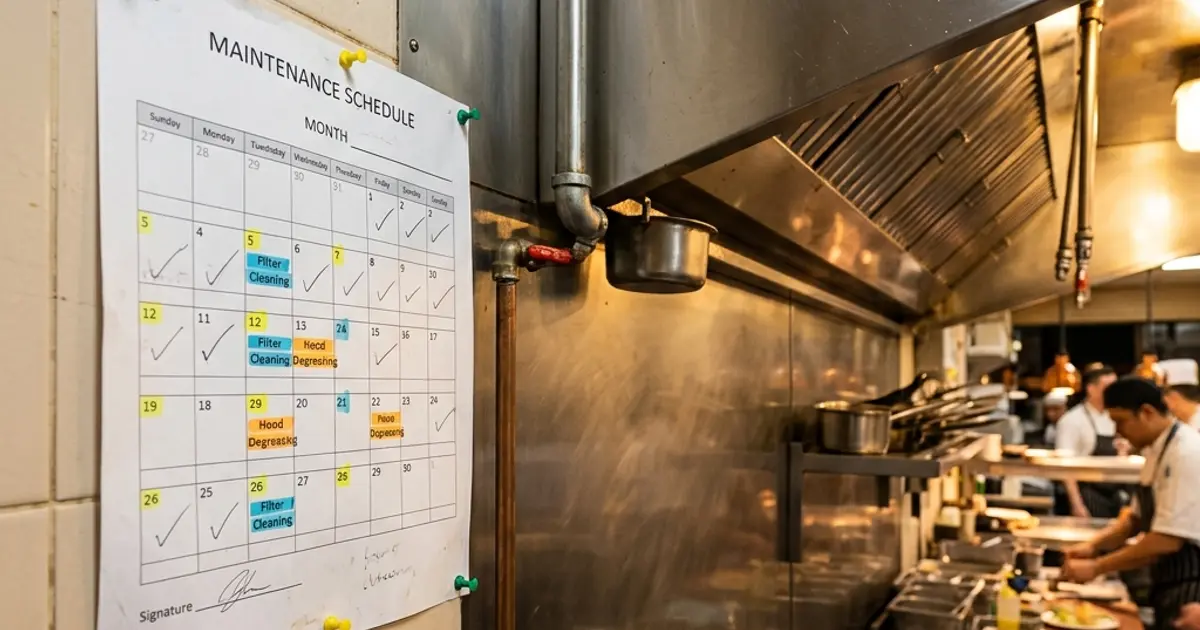
NFPA 96 requires commercial kitchen hoods to be cleaned monthly (high-volume and solid fuel cooking), quarterly (moderate-volume), semi-annually (low-volume), or annually (seasonal operations). The cleaning frequency depends on your kitchen's cooking volume and fuel type. Whether you run a 24-hour diner or a seasonal concession stand, understanding and following the correct hood cleaning schedule is essential for fire safety, insurance compliance, and passing health inspections.
1. NFPA 96 Cleaning Frequency Table
The National Fire Protection Association (NFPA) publishes Standard 96, the primary code governing commercial kitchen ventilation and fire safety in the United States. Chapter 11 of NFPA 96 outlines specific cleaning frequency requirements based on the type and volume of cooking operations. The table below summarizes the four cleaning intervals defined by the standard. For the complete regulatory breakdown, see our NFPA 96 compliance guide. Whatever interval you land on, it applies to the whole system, so a compliant visit means a full kitchen exhaust cleaning rather than the hood alone.
| Frequency | Type of Operation | Examples |
|---|---|---|
| Monthly | High-volume cooking, 24-hour operations, solid fuel (wood, charcoal, mesquite) | 24/7 diners, fast food chains, steakhouses with wood-fired grills, wok cooking |
| Quarterly | Moderate-volume cooking | Full-service restaurants, hotel kitchens, school cafeterias |
| Semi-Annually | Low-volume cooking | Churches, day camps, senior centers, seasonal restaurants |
| Annually | Minimal-volume cooking | Seasonal concession stands, church kitchens used monthly |
Source: NFPA 96, Standard for Ventilation Control and Fire Protection of Commercial Cooking Operations, Chapter 11.
2. How to Determine Your Kitchen's Frequency
Determining the correct cleaning frequency for your commercial kitchen is not a one-size-fits-all calculation. Several factors work together to determine how quickly grease accumulates in your hood system, and the rate of grease buildup is what ultimately drives your required cleaning interval. A certified IKECA-certified technician can assess your system and recommend the right schedule, but you should understand the key factors yourself.
Hours of Operation
The number of hours your kitchen operates each day is the single most important factor. Kitchens running 16 or more hours daily are classified as high-volume under the 2025 NFPA 96 update, requiring monthly cleaning regardless of cooking type. A kitchen operating 8 to 12 hours per day with moderate output typically falls into the quarterly category. Part-time operations with only a few hours of cooking per week may qualify for semi-annual or annual cleaning.
Fuel Type
Solid fuel cooking -- including wood, charcoal, and mesquite -- produces significantly more grease particulate and creosote than gas or electric cooking. Any kitchen using solid fuel cookers automatically falls into the monthly cleaning category, even if overall cooking volume is moderate. This applies to wood-fired pizza ovens, charcoal grills, mesquite smokers, and similar equipment.
Menu Items and Grease Output
High-grease menu items accelerate buildup inside the exhaust system. Deep-fried foods, charbroiled burgers and steaks, stir-fry dishes cooked in woks, and bacon-heavy breakfast menus all generate substantial grease vapor. A restaurant with a primarily grilled or fried menu will need more frequent cleaning than one focused on baked, steamed, or raw preparations. If your kitchen produces visible grease residue on hood surfaces within days of a cleaning, your frequency should likely be increased.
Cooking Equipment
Certain types of cooking equipment are inherently higher grease producers. Charbroilers are among the worst offenders, generating dense grease-laden smoke that quickly coats ductwork. Commercial woks produce large volumes of grease vapor due to the high temperatures and oil volumes used. Deep fryers, griddles, and rotisseries also contribute to rapid grease buildup. If your kitchen relies heavily on these appliances, you should lean toward more frequent cleaning even if your volume appears moderate. Use our directory to find cleaners who specialize in your equipment type.
3. Monthly Cleaning Requirements
Monthly hood cleaning is required for the highest-risk commercial kitchen operations. These are kitchens where grease accumulates rapidly due to extended hours, intense cooking methods, or solid fuel use. Monthly cleaning is the most demanding schedule, but it is absolutely necessary to prevent dangerous grease buildup in these environments.
Operations that require monthly cleaning include:
- 24-hour restaurants and diners -- kitchens that operate around the clock with continuous cooking generate extreme grease accumulation. Truck stops, all-night diners, and 24-hour fast casual restaurants all fall into this category.
- Fast food and quick-service restaurants (QSR) -- high-volume deep frying, charbroiling, and griddle cooking make fast food kitchens some of the highest grease producers in the industry.
- Solid fuel cooking operations -- any kitchen using wood, charcoal, mesquite, or other solid fuels for cooking must be cleaned monthly. This includes steakhouses with wood-fired grills, barbecue restaurants, pizzerias with wood-fired ovens, and any establishment using charcoal or mesquite.
- High-volume institutional kitchens -- large hospital kitchens, military mess halls, and university dining facilities that serve thousands of meals per day often require monthly cleaning due to sheer volume.
2025 Update: The latest NFPA 96 revisions clarify that kitchens operating 16 or more hours per day now fall under mandatory monthly cleaning requirements, even if they do not use solid fuel cooking. This change affects many full-service restaurants that operate extended breakfast-through-dinner hours. If your kitchen runs 16+ hours daily, you must now schedule professional hood cleaning every month.
4. Quarterly Cleaning Requirements
Quarterly cleaning -- every three months -- is the most common schedule for commercial kitchens in the United States. This frequency applies to moderate-volume operations that produce a steady but manageable amount of grease during normal business hours. The majority of sit-down restaurants, hotel kitchens, and school cafeterias fall into this category.
Typical quarterly cleaning operations include:
- Full-service restaurants -- standard sit-down restaurants operating during typical lunch and dinner hours with a mixed menu of grilled, sauteed, baked, and fried items.
- Hotel kitchens -- hotel restaurant and banquet kitchens that serve moderate volumes on a daily basis without operating around the clock.
- School and university cafeterias -- institutional kitchens serving breakfast and lunch during the academic year with standard cooking equipment.
- Corporate cafeterias -- workplace dining facilities that operate during weekday business hours with moderate cooking output.
- Moderate-volume catering kitchens -- commercial catering operations that prepare meals regularly but not on a continuous basis.
If you operate a quarterly-schedule kitchen, it is important to maintain consistent cleaning intervals. Stretching a quarterly cleaning to five or six months can result in grease buildup that approaches dangerous levels. Many hood cleaning companies offer scheduled quarterly maintenance plans so you never miss a cleaning. Expect to pay between $400 and $800 per cleaning for a standard restaurant setup -- see our hood cleaning cost guide for detailed pricing.
5. Semi-Annual and Annual Requirements
Semi-annual (every six months) and annual (once per year) cleaning schedules apply to low-volume and minimal-volume cooking operations. These are kitchens that see limited use and produce relatively small amounts of grease. While the cleaning frequency is lower, it is still a legal and safety requirement -- no commercial kitchen with a hood system is exempt from cleaning.
Semi-Annual Cleaning Operations
- Churches and places of worship -- fellowship hall kitchens used for weekly or bi-weekly community meals and potluck events.
- Day camps and community centers -- kitchens that prepare meals seasonally or a few times per week during active periods.
- Senior centers -- meal preparation facilities that operate on a limited schedule, typically serving one meal per day on weekdays.
- Seasonal restaurants -- establishments that operate only during certain months of the year, such as summer tourist areas or ski resort kitchens.
Annual Cleaning Operations
- Seasonal concession stands -- fairground food booths, outdoor event kitchens, and similar operations that run for limited periods each year.
- Church kitchens used monthly or less -- kitchens that are only used for occasional holiday dinners, funeral receptions, or special events a handful of times per year.
- Private club kitchens with minimal use -- lodge or club kitchens that prepare food infrequently for members-only events.
Even if your kitchen qualifies for annual cleaning, you should still perform regular visual inspections of hood surfaces, filters, and accessible ductwork. If you notice visible grease accumulation before your scheduled cleaning date, contact a professional through our cleaner directory to schedule an early cleaning. Browse by state to find licensed operators in your area.
6. What Happens If You Skip a Cleaning
Skipping a scheduled hood cleaning is one of the most dangerous decisions a kitchen operator can make. The consequences extend far beyond a simple code violation -- they include genuine life-safety risks and severe financial exposure. Here is what you face when you miss a required cleaning.
Fire Risk
Grease fires are the number one cause of commercial kitchen fires in the United States. Accumulated grease in hood systems, ductwork, and exhaust fans can ignite at temperatures as low as 400 degrees Fahrenheit. Once a grease fire starts inside a duct, it can spread rapidly throughout the building, causing catastrophic damage and endangering lives. According to the National Fire Protection Association, cooking equipment is involved in nearly half of all reported restaurant fires.
Insurance Consequences
Your commercial property and liability insurance policies almost certainly require compliance with NFPA 96. If a fire occurs and your insurer discovers that you missed required hood cleanings, your claim can be denied entirely. This means you would be personally liable for all property damage, business interruption losses, injury claims, and legal costs -- potentially hundreds of thousands or millions of dollars.
Fines and Code Violations
Fire marshals and health inspectors routinely check hood cleaning records during inspections. Violations for non-compliance typically result in fines ranging from $500 to $10,000 or more, depending on your jurisdiction and the severity of the violation. Repeat offenders face escalating penalties, and in extreme cases, authorities can order an immediate shutdown of your kitchen until compliance is restored. Our guide on failed hood cleaning inspections walks you through the recovery process step by step.
Health Department Issues
Many health departments now include hood cleanliness as part of their routine inspections. A dirty hood system can result in point deductions on your health inspection score, which may be publicly posted. Repeated issues can trigger more frequent inspections and additional scrutiny of your entire operation.
7. Keeping Track of Your Schedule
Maintaining proper documentation of your hood cleaning schedule is just as important as the cleaning itself. Without proof of compliance, you have no defense during an inspection or insurance review. Here are the best practices for tracking your cleaning schedule in 2026.
Cleaning Certificates
After every cleaning, your hood cleaning company should provide a detailed certificate or report. This document should include the date of service, the name and certification number of the technician, the areas cleaned (hood, ductwork, fans, filters), before and after photos, and the company's contact information. Keep these certificates organized and easily accessible -- inspectors will ask to see them.
Sticker Placement
Most professional hood cleaning companies place a dated service sticker on the hood or a visible location in the kitchen after each cleaning. This sticker shows the date of the last cleaning and the recommended date for the next service. Fire marshals and inspectors often check for these stickers as a quick verification of compliance. Make sure your cleaning company provides them and that they are placed where inspectors can easily see them.
Digital Records (2025 Requirement)
The 2025 NFPA 96 update recommends digital record-keeping as a best practice, and many local jurisdictions are beginning to require it. Digital records include scanned copies of cleaning certificates, timestamped before-and-after photos, and electronic maintenance logs. Cloud-based storage ensures that records are not lost to fire, flooding, or simple misplacement. Many cleaning companies now provide digital reports and online portals where you can access your complete cleaning history.
Reminder Systems
Set up calendar reminders at least two weeks before your next scheduled cleaning. This gives you enough time to confirm with your cleaning company and handle any scheduling conflicts. Many hood cleaning companies offer automated reminder services and will contact you when your next cleaning is approaching. For complete guidance on what records to keep and how to organize them, read our hood cleaning documentation guide.
Ready to Schedule Your Next Hood Cleaning?
Find certified, NFPA 96-compliant hood cleaning professionals near you.
Find a Hood Cleaner