Hood Cleaning Documentation: Records and Certificates
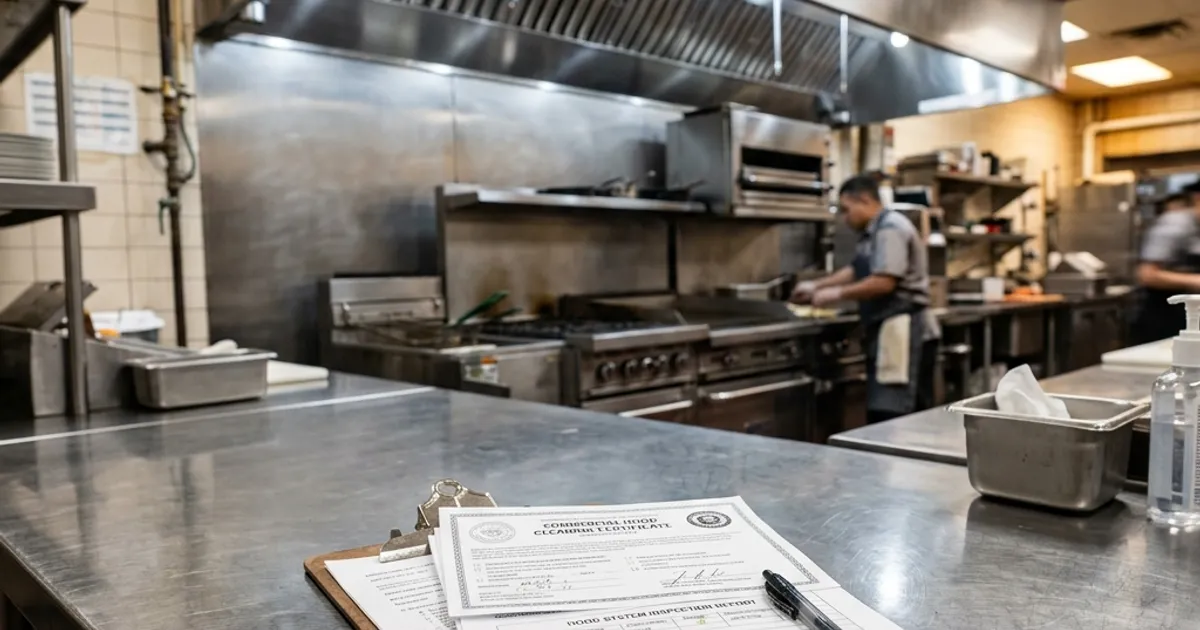
NFPA 96 (National Fire Protection Association Standard 96) requires all commercial kitchens to maintain documented records of every hood cleaning service. The 2025 edition now mandates digital documentation. Proper records protect you during inspections, insurance claims, and fire marshal audits.
What Documentation Is Required
Every time a professional service cleans your commercial kitchen exhaust system, three core documents must be generated and retained. These are not optional — the AHJ (Authority Having Jurisdiction), such as your local fire marshal or health department, can demand them at any time.
1. Cleaning Certificate
A signed document from the service provider confirming the date of service, areas cleaned, technician name, and compliance with NFPA 96. This is the primary proof of service.
2. Inspection Report
A written assessment of the system's condition before and after cleaning. The report must note any deficiencies observed — areas not cleaned due to access limitations, damaged components, or grease buildup beyond normal levels. Deficiency reports are especially important if you later face a failed inspection.
3. Before-and-After Photographs
Timestamped photos of the hood filters, plenum, ductwork access points, and fan before cleaning begins and after it is complete. Photos provide objective evidence of cleaning quality and are increasingly required by insurance carriers and AHJs.
Your cleaning contractor should provide all three documents automatically after every visit. If they do not, request them in writing before they leave the premises. A reputable company listed in our hood cleaner directory will have no issue supplying complete documentation.
The 2025 Digital Documentation Mandate
The 2025 edition of NFPA 96 introduced a significant change to how documentation must be stored and delivered. Paper-only records are no longer sufficient in many jurisdictions. Here is what changed and how to comply.
What Changed
- Cleaning certificates must now be supplied in a durable digital format (PDF is widely accepted).
- Photographs must be timestamped and stored digitally, not just printed.
- Some jurisdictions have begun requiring records to be accessible via a cloud portal so AHJs can retrieve them remotely without an on-site visit.
- Digital records must be backed up — a single local file on a device that could be lost or damaged does not satisfy the spirit of the requirement.
How to Comply
Ask your hood cleaning company to email you the full documentation package immediately after each service. Store those emails and attachments in a dedicated folder or upload them to a shared drive. For the full scope of what the 2025 update requires, read our NFPA 96 2025 update guide.
Hood Cleaning Certificates
The cleaning certificate is the single most important document in your compliance file. It is the first thing an inspector will ask to see, and its absence — or incompleteness — is one of the most common reasons kitchens receive violations.
What a Valid Certificate Must Include
- Name, address, and license number of the cleaning company
- Names of technicians who performed the work
- Date and time of service
- Address of the facility serviced
- Description of all components cleaned (hood, filters, plenum, duct, fan)
- Any areas that were not accessible or not cleaned, with explanation
- Statement of compliance with NFPA 96 or applicable local code
- Signature of the responsible technician or company officer
Who Issues Certificates and How Long to Keep Them
Certificates are issued by the cleaning company, not by a government agency. This means quality varies widely. Certificates from IKECA (International Kitchen Exhaust Cleaning Association) certified companies follow a standardized format that AHJs recognize immediately. Learn more in our IKECA certification guide. Keep every certificate for a minimum of three years — five years is strongly recommended.
Cleaning Stickers
In addition to formal certificates, NFPA 96 requires the hood cleaning company to affix a service sticker to the exhaust hood or associated equipment after each cleaning. Inspectors check for this sticker as a quick visual indicator of compliance status.
Where Stickers Go
The sticker must be placed in a visible location on the hood or duct access panel — typically near the filters or on the exterior of the hood canopy. It should not be hidden behind equipment or placed where it could be easily damaged by heat or grease.
What Information Stickers Must Show
- Company name and contact information
- Date of the most recent cleaning
- Date the next cleaning is due
- Areas that were not cleaned (if any), noted with an explanation
Why Inspectors Check Stickers
A sticker is the fastest compliance check an inspector can perform. An outdated or missing sticker immediately triggers further scrutiny and a request for your paper or digital records. If the sticker shows a next-due date that has already passed, expect a violation notice regardless of whether you have other paperwork in order.
How Long to Keep Records
NFPA 96 establishes a minimum retention period, but insurance carriers and local AHJs often impose longer requirements. Use the following guidelines to stay safely within all applicable thresholds.
| Record Type | NFPA 96 Minimum | Recommended |
|---|---|---|
| Cleaning certificates | 3 years | 5 years |
| Inspection reports | 3 years | 5 years |
| Before-and-after photos | 3 years | 5 years |
| Deficiency notices | Until resolved + 1 year | 5 years after resolution |
Many commercial property insurance policies require that records be available for the life of the policy plus a tail period. When in doubt, err on the side of keeping records longer. Digital storage is essentially free, and the cost of not having a record during a fire investigation or insurance claim can be catastrophic.
Tips for Organized Record-Keeping
Staying organized prevents the scramble that happens when an inspector shows up unannounced. The following methods work well for operators of all sizes.
Digital Systems
Create a dedicated folder in Google Drive, Dropbox, or a similar cloud service named "Hood Cleaning Records." After each service, upload the certificate, inspection report, and all photos into a subfolder named by year and date (e.g., 2026-03 / March 2026 Cleaning). Share read-only access with your insurance agent and property manager so they always have the records they need.
The Binder Method
Keep a dedicated binder on-site, stored near the hood or in the manager's office. File each service package chronologically with the most recent cleaning at the front. Label the spine with the facility name and the date range covered. This low-tech approach ensures records are available even during a power outage or internet disruption.
What to Ask Your Cleaner
- Do you provide a signed cleaning certificate after every service?
- Will you email me the documentation package the same day as service?
- Are your certificates provided in PDF format to meet the 2025 digital mandate?
- Do you photograph the hood before and after cleaning, and are timestamps included?
- Will you note any deficiencies or inaccessible areas in writing on the report?
Any cleaner you hire from our hood cleaning services directory should answer yes to all of these questions without hesitation. If they cannot, look for a more qualified provider.
Frequently Asked Questions
Find a Cleaner Who Provides Complete Documentation
Browse hood cleaning companies and ask each one for NFPA 96-compliant certificates, digital reports, and timestamped photos after every service.
Browse Hood CleanersRelated Guides
NFPA 96 Compliance Guide
The complete breakdown of NFPA 96 requirements for commercial kitchen exhaust cleaning.
NFPA 96 2025 Update
What changed in the latest edition and how it affects your documentation obligations.
Failed Hood Cleaning Inspection
Steps to take immediately after receiving a violation notice or failed inspection.
IKECA Certification Guide
Why hiring an IKECA certified cleaner leads to more credible, inspection-ready documentation.