NFPA 96 2025 Update: What Changed for Your Kitchen
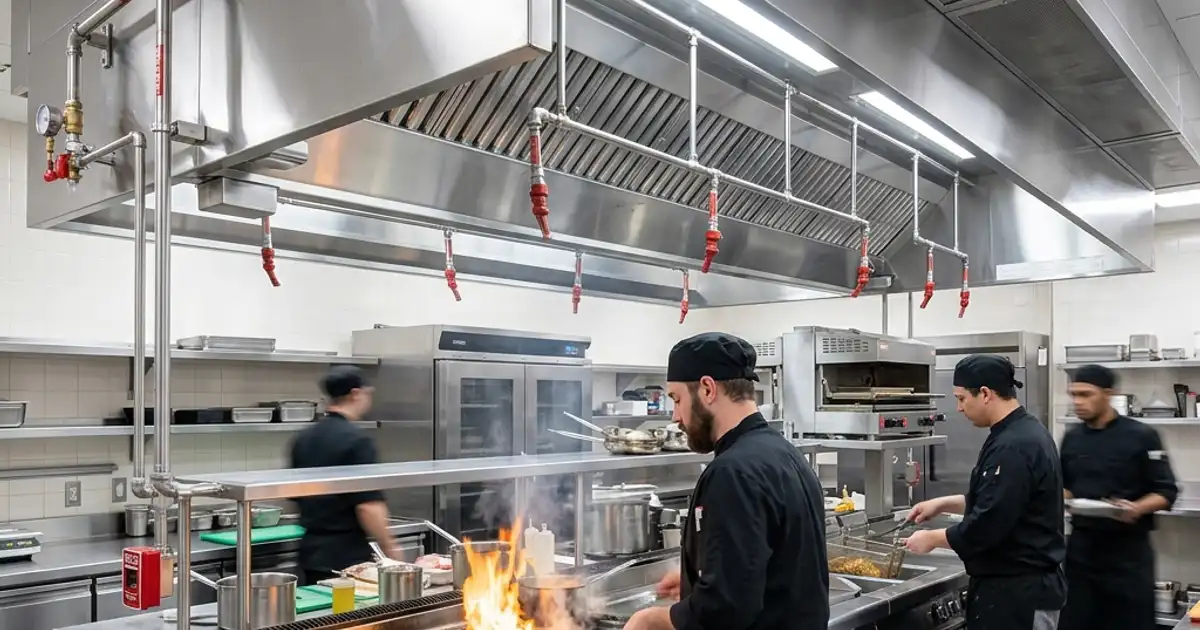
The 2025 edition of NFPA 96 (the National Fire Protection Association standard governing commercial kitchen exhaust system installation, inspection, and maintenance) introduces five significant changes affecting commercial kitchens: mandatory monthly cleaning for 16+ hour operations, UL-300 (Underwriters Laboratories standard for commercial cooking fire suppression) requirements with no grandfathering, digital documentation mandates, expanded access panel requirements, and new rooftop grease containment standards.
Overview of Key Changes
The 2025 NFPA 96 edition, effective for adoption by most jurisdictions in early 2026, addresses gaps identified through fire incident data and industry input collected since the 2021 edition. Here is a concise summary of all five major changes:
- Monthly cleaning for 16+ hour operations: Any commercial kitchen operating 16 or more hours per day must now be cleaned monthly, regardless of fuel type or cooking method.
- UL-300 fire suppression with no grandfathering: All commercial kitchens must have a UL-300 listed suppression system. Legacy dry-chemical and non-UL-300 Ansul systems are no longer accepted without upgrade.
- Digital documentation mandate: Operators must maintain digital copies of cleaning certificates, inspection reports, and suppression system records in addition to physical documentation.
- Expanded access panel requirements: Exhaust ductwork must now include access panels at every directional change and at code-specified intervals, enabling inspectors and cleaners to verify full system cleaning.
- Rooftop grease containment standards: New requirements address grease discharge from exhaust fans at the rooftop level, mandating containment systems to prevent environmental contamination and fire spread across the roof surface.
Each change is detailed in the sections below. For the baseline requirements that remain unchanged, see our full NFPA 96 compliance guide.
Monthly Cleaning for 16+ Hour Operations
Prior to the 2025 update, mandatory monthly cleaning was triggered by cooking method: solid fuel cooking (wood, charcoal, mesquite), high-volume charbroiling, or wok cooking. The 2025 edition adds a new trigger based purely on operating hours. Any kitchen that is actively cooking for 16 or more hours per day, regardless of what is on the menu or what equipment is used, must now be cleaned monthly.
Who this affects: 24-hour diners, hospital cafeterias, casino kitchens, hotel kitchens with overnight room service, and any operation running back-to-back meal service periods that together exceed 16 hours of active cooking.
How to determine your daily cooking hours: Count the hours during which your cooking equipment (fryers, griddles, ovens, ranges, charbroilers) is actively operating, not merely the hours the facility is open. A restaurant open 18 hours but cooking only 14 of those hours may not meet the 16-hour threshold; however, operators should document this carefully for AHJ (Authority Having Jurisdiction -- the local fire marshal or code enforcement body responsible for adopting and enforcing NFPA 96) review.
If your operation falls near the 16-hour line, consult your AHJ for a written determination. For a complete schedule by kitchen type, visit our hood cleaning frequency guide.
UL-300 Fire Suppression Requirements
UL-300 is the Underwriters Laboratories listing standard for commercial cooking area fire suppression systems. Systems meeting this standard use wet-chemical agents engineered for the higher cooking temperatures produced by modern fryers and griddles. Older dry-chemical systems (sometimes called Ansul Class BC systems) were designed for lower-temperature cooking equipment and are no longer effective for contemporary commercial kitchens.
No grandfathering: The 2025 edition removes the previously available grandfathering provisions that allowed pre-UL-300 systems to remain in service indefinitely if they had been installed before UL-300 was first adopted. Every commercial kitchen must now have a UL-300 listed system on a code-compliant inspection schedule.
Upgrade timeline: The 2025 edition does not specify a single national deadline; enforcement follows local AHJ adoption schedules. Most jurisdictions that have adopted the 2025 edition are requiring compliance at the time of the next scheduled fire suppression inspection or permit renewal.
Typical upgrade cost: Installing a UL-300 wet-chemical suppression system in a standard restaurant-size kitchen typically costs between $2,000 and $5,000, depending on the number of cooking appliances protected, hood size, and local labor rates. Larger operations with multiple cooking lines should budget higher. Get quotes from certified contractors in your area.
Digital Documentation Mandate
The 2025 NFPA 96 update formalizes digital record-keeping as a required complement to physical documentation. Operators must maintain digital copies of all cleaning certificates, before-and-after photographs, inspection reports, and suppression system service records and make them available to AHJ inspectors upon request.
What counts as compliant digital documentation:
- PDF copies of cleaning certificates stored in cloud services (Google Drive, Dropbox, OneDrive)
- Digital service reports emailed directly by your hood cleaning contractor
- Photographs of the cleaned system stored with date metadata intact
- Records maintained in a compliant kitchen management or facility maintenance app
How to implement: Create a dedicated folder in your preferred cloud storage service named by year and quarter. After every service visit, ask your hood cleaning contractor to email the certificate and photos directly. File them immediately. Physical certificates must still be posted on-site near the hood.
For a complete breakdown of every record NFPA 96 requires you to keep, see our hood cleaning documentation guide.
Access Panel Requirements
One of the most operationally impactful changes in the 2025 update is the expanded access panel specification for exhaust ductwork. Under previous editions, the number and placement of access openings was often left to installer judgment. The 2025 edition standardizes requirements, mandating access panels:
- At every change of direction in the duct run (horizontal to vertical and vice versa)
- At maximum intervals along horizontal duct sections as specified in the updated code tables
- Adjacent to all fan assemblies for pre- and post-cleaning inspection
Existing systems that do not meet the new access panel layout must be retrofitted. AHJs are expected to flag non-compliant duct configurations during routine inspections.
Installation costs: Adding a single access panel to an existing duct run typically costs $150 to $400 depending on duct material and ceiling access. Multi-panel retrofits for complex duct systems can run $1,000 to $3,000 or more.
Find qualified contractors who perform NFPA-compliant access panel retrofits through our access panel installation service page.
Rooftop Grease Containment Standards
Exhaust fans discharge grease-laden air at the rooftop level. Over time, accumulated grease around fan bases creates a significant fire hazard -- a spark from the fan motor or nearby equipment can ignite pooled grease and spread fire across the roof surface rapidly. The 2025 NFPA 96 update introduces prescriptive rooftop grease containment standards to address this risk directly.
The new standards require:
- Listed grease containment devices installed at each exhaust fan discharge point
- Containment trays or curb systems that prevent grease from migrating across the roof membrane
- Regular inspection and cleaning of rooftop containment components as part of the standard hood cleaning service
Beyond fire safety, these rules address environmental compliance. Grease runoff from rooftops can contaminate stormwater systems and trigger violations under local environmental ordinances, especially in states with active environmental enforcement programs.
Learn more about installation and compliance requirements for your building on our rooftop grease containment service page.
Timeline and Enforcement
NFPA 96 is a model code, not federal law. It becomes enforceable in a given location only when the AHJ (Authority Having Jurisdiction -- your local fire marshal, fire department, or building code office) formally adopts it. Adoption timelines vary widely:
- Early-adopter jurisdictions (including many major metropolitan fire departments) began enforcing the 2025 edition on January 1, 2026.
- State-level adopters typically update their building and fire codes on a cycle tied to state legislative sessions, meaning some states may not adopt the 2025 edition until 2027 or later.
- Jurisdictions with existing local amendments may adopt portions of the 2025 edition while retaining local modifications to other sections.
How AHJs enforce the new rules: In most cases, compliance with the 2025 changes will be verified at routine fire inspections and at the time of permit renewals, new construction sign-offs, or tenant improvement permits. Inspectors may also flag non-compliant systems during complaint-driven inspections. Fines, correction orders, and in severe cases temporary closure orders are the typical enforcement tools.
To find out exactly which edition is enforced in your area and what the local compliance deadlines are, contact your local fire marshal directly. You can also find a certified hood cleaner who understands local AHJ expectations and can help you achieve compliance before your next inspection.
Frequently Asked Questions
Ready to Get Compliant with the 2025 NFPA 96 Update?
Find IKECA-certified hood cleaning contractors in your area who are trained on the 2025 NFPA 96 requirements and can handle cleaning, access panel retrofits, and rooftop containment installations.
Find a Hood Cleaner Near YouRelated Guides
- NFPA 96 Compliance Guide for Restaurant Owners -- Full baseline requirements, cleaning schedules, and enforcement overview
- Hood Cleaning Frequency Guide -- Monthly, quarterly, semi-annual, and annual schedules by kitchen type
- Hood Cleaning Documentation Guide -- Every record NFPA 96 requires you to keep, including the 2025 digital mandate
- All Guides -- Browse the complete hood cleaning knowledge base