What Happens If You Fail a Hood Cleaning Inspection
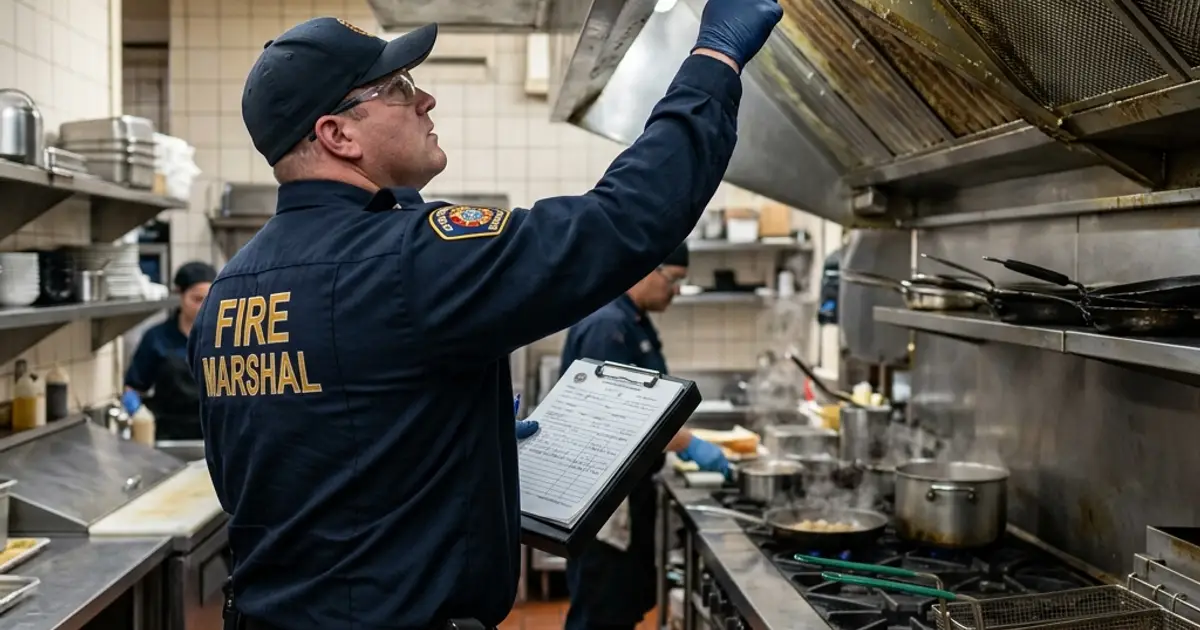
Failing a hood cleaning inspection can result in fines ranging from $500 to $10,000, forced kitchen closure, and voided insurance coverage. Fire marshals have the authority to shut down non-compliant kitchens immediately. Understanding what inspectors look for, how penalties escalate by severity, and exactly what steps to take after a failed inspection can mean the difference between a quick fix and a prolonged closure that threatens your business.
How Hood Cleaning Inspections Work
Commercial kitchen exhaust systems are inspected by the AHJ (Authority Having Jurisdiction), a term defined by NFPA 96 (National Fire Protection Association Standard for Ventilation Control and Fire Protection of Commercial Cooking Operations) to describe the local fire marshal, fire inspector, or building official with enforcement authority in your jurisdiction. In some states, health department inspectors also review exhaust system cleanliness as part of a routine food service inspection.
Inspections can be scheduled or unannounced. Fire marshals typically conduct annual or semi-annual fire safety inspections of commercial kitchens, during which they evaluate the entire exhaust system from the hood canopy and filters down through the ductwork to the rooftop exhaust fan. They check grease accumulation levels, suppression system readiness, and whether your cleaning frequency matches the requirements set by NFPA 96.
Inspectors also verify service documentation. You are required to maintain records of every professional cleaning, including the date, cleaning company name, IKECA (International Kitchen Exhaust Cleaning Association) certification number if applicable, areas cleaned, and any deficiencies noted. These records must be available for review on demand. A missing or incomplete service record is itself a violation, even if your hood looks clean.
Common Reasons for Failing
Most hood cleaning inspection failures fall into one of four categories. Understanding these failure modes helps you address them proactively before an inspector arrives.
- Excessive grease buildup: This is the most common failure reason. NFPA 96 defines acceptable grease thickness limits, and inspectors use a scraper test to measure accumulation on hood surfaces, duct interiors, and exhaust fan components. High-volume cooking operations that fry, grill, or wok-cook are particularly susceptible to rapid buildup between cleanings. Kitchens that clean less frequently than the recommended schedule almost always fail this test.
- Missing or incomplete documentation: Inspectors require a service certificate posted near the hood or kept accessible on-site. If you cannot produce records showing cleaning dates, the technician's credentials, and the scope of work performed, you will receive a violation regardless of the physical condition of the hood.
- Non-functional or obstructed fire suppression system: The fire suppression system must be fully operational and unobstructed. Grease-clogged nozzles, expired suppression agent cartridges, or fusible links that have been painted over or blocked by equipment are all immediate violations. Suppression system issues are treated as critical deficiencies and almost always result in the most severe penalties.
- Blocked or missing access panels: NFPA 96 requires access panels to be installed at regular intervals along the duct run so that inspectors and cleaning technicians can reach the interior of the ductwork. If panels are missing, welded shut, blocked by kitchen equipment, or were never installed, the inspector cannot verify that the duct interior has been properly cleaned. This is a common violation in older kitchens that predate modern code requirements.
Secondary failure reasons include grease dripping onto cooking surfaces, rooftop grease containment systems that are overflowing or absent, and exhaust fans that are not functioning at the required airflow capacity.
Penalties by Severity
Penalties for a failed hood cleaning inspection are not uniform. The AHJ assigns consequences based on the severity of the violation, whether the deficiency presents an imminent fire hazard, and your compliance history. The following table summarizes typical outcomes at each severity level.
| Severity Level | Typical Outcome | Fine Range |
|---|---|---|
| Minor violation | Written warning, 30-90 day correction window | $0 - $500 |
| Moderate violation | Notice of violation, 7-30 day correction window, re-inspection required | $500 - $2,500 |
| Serious violation | Mandatory closure until remediated, re-inspection before reopening | $2,500 - $5,000 |
| Imminent hazard | Same-day closure, possible criminal referral for repeat offenders | $5,000 - $10,000+ |
Fine amounts vary significantly by state and municipality. California, New York, and Illinois tend to levy the highest fines. Some jurisdictions impose daily fines that accumulate until the violation is corrected, meaning a $500 per-day fine can quickly reach $10,000 or more if you delay remediation.
Important: A closure order means zero revenue. Even a three-day closure during a busy weekend can cost a typical restaurant $5,000 to $15,000 in lost sales alone, far exceeding the cost of regular hood cleaning service.
Insurance Implications
The financial consequences of a failed inspection extend well beyond the fines themselves. Your commercial property insurance policy is directly tied to your maintenance compliance, and insurers have become increasingly aggressive in denying claims where poor kitchen maintenance is a contributing factor.
Claim Denials After a Fire
If a fire starts in or near your exhaust system and you cannot produce documentation proving that the system was cleaned to NFPA 96 standards at the required frequency, your insurer can deny your claim under the policy's maintenance exclusion clause. This denial can apply to property damage, business interruption, and liability claims. Restaurant owners have lost hundreds of thousands of dollars in fire claims because they could not produce a single cleaning certificate.
Policy Cancellation
Some insurers conduct their own periodic reviews of commercial kitchen compliance records. A documented history of inspection failures, especially one that resulted in a closure order, can trigger a mid-term policy cancellation. Losing your commercial property insurance mid-term leaves you unprotected and can also violate your lease agreement, putting your physical location at risk.
Premium Increases
Even if your insurer does not cancel your policy, a fire incident or documented compliance failure will likely result in a significant premium increase at renewal. Premium hikes of 20 to 50 percent are common following a kitchen fire claim, and insurers may require proof of a current cleaning contract as a condition of renewal. The cumulative cost of higher premiums over several years can dwarf the original cost of the incident.
The safest strategy is to maintain complete cleaning records and ensure your service certificates meet the documentation standards your insurer requires. Review our hood cleaning documentation guide to confirm your records meet both NFPA 96 and insurer requirements.
How to Pass Every Time
Passing a hood cleaning inspection is not difficult when you have the right systems in place. The kitchens that consistently pass are not the ones with the newest equipment — they are the ones with the most disciplined maintenance programs.
- Follow the correct cleaning frequency: NFPA 96 sets minimum cleaning intervals based on cooking volume and type. High-volume operations using solid fuels must clean monthly. Most standard restaurants require quarterly cleaning. Refer to our hood cleaning frequency guide to confirm the right schedule for your kitchen type. Cleaning more frequently than the minimum is always acceptable and can reduce per-service costs by keeping buildup manageable.
- Maintain a complete documentation file: Create a dedicated binder or digital folder for your exhaust system records. Include every service certificate, inspection report, and re-inspection notice. Post the most recent certificate visibly near the hood and ensure older records are readily accessible.
- Choose IKECA-certified cleaners: Hiring a company with IKECA certification signals to inspectors that your cleaning work meets the industry's highest standards. Certified technicians are trained to clean the full system, document deficiencies, and issue certificates that satisfy both NFPA 96 and insurer requirements. Find certified professionals through our hood cleaner directory.
- Schedule fire suppression inspections separately: Your fire suppression system requires its own semi-annual inspection by a licensed fire suppression contractor. Do not assume your hood cleaner covers this. Confirm your suppression system is current before any fire marshal visit.
- Train kitchen staff on daily maintenance: Instruct staff to wipe down accessible hood surfaces, clean or replace grease filters weekly, and report any unusual grease dripping or suppression system issues immediately. Daily attention significantly reduces buildup between professional cleanings and lowers your inspection risk.
What to Do If You Fail
Receiving a failed inspection notice is stressful, but acting quickly and methodically can minimize penalties and get your kitchen back into compliance as fast as possible.
Step 1 — Read the Notice Carefully
The inspection notice will specify exactly which violations were cited, the severity classification, and the correction deadline. Some notices include a list of required corrective actions. Read every line carefully before calling anyone. Misunderstanding the scope of the required work can lead to an incomplete remediation and a second failed re-inspection.
Step 2 — Contact a Certified Hood Cleaner Immediately
Call a certified hood cleaning company as soon as possible and explain that you have received a violation notice with a specific deadline. Request an emergency or priority service appointment. Provide the inspector's contact information to the cleaning company so they understand exactly what was cited and can ensure their work addresses every deficiency.
Step 3 — Address Every Cited Deficiency
Do not just clean the obvious surfaces. If the notice cited blocked access panels, have them cleared or reinstalled. If the suppression system was flagged, engage a licensed suppression contractor immediately. If documentation was missing, confirm that your cleaning company will issue a certificate that meets the specific requirements noted by the inspector. A re-inspection will check every cited item.
Step 4 — Request Re-Inspection Before Your Deadline
Once corrective work is complete, contact the AHJ to schedule a re-inspection. Request the appointment well before your correction deadline to allow time for any follow-up issues. Bring your new service certificate, before-and-after photos from the cleaning company, and any other documentation the inspector requested. If you receive a passing result, store the re-inspection report with your permanent compliance file. Review our full guide on NFPA 96 compliance to ensure you understand the ongoing requirements that keep you compliant year-round.
Frequently Asked Questions
Don't Risk a Failed Inspection
Find IKECA-certified hood cleaners in your area and get the documentation you need to pass every time.
Find Certified Hood Cleaners