Hood Cleaning vs DIY: Why Professional Service Is Required
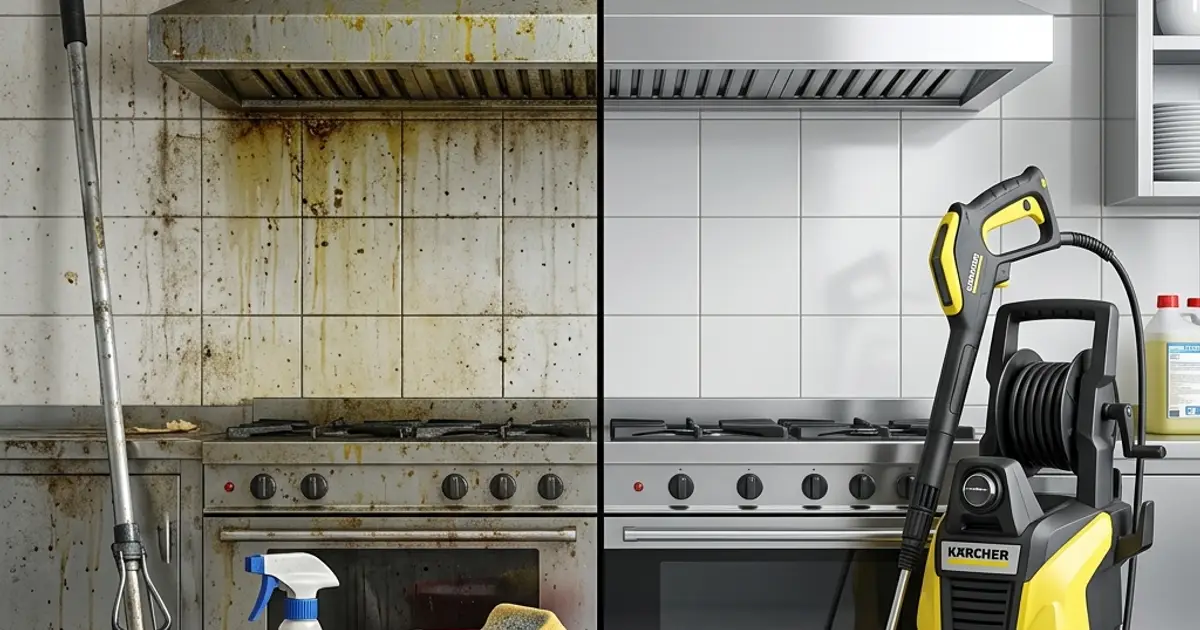
DIY hood cleaning does not satisfy NFPA 96 requirements. Fire marshals and insurance companies require professional cleaning by trained technicians who can access internal ductwork, verify fire suppression systems, and provide compliance documentation. NFPA 96 (National Fire Protection Association Standard 96) is the governing code for commercial kitchen exhaust systems in the United States, and it draws a clear line between routine owner maintenance and the deep-system cleaning that only a licensed professional can perform. Understanding that line protects your business from fines, forced closures, and voided insurance coverage.
What Restaurant Owners Can Do Themselves
NFPA 96 does not prohibit restaurant owners from performing routine upkeep between professional service visits. In fact, daily and weekly maintenance tasks are encouraged because they reduce grease accumulation and help identify problems early. The following tasks are within the scope of owner-performed maintenance:
- Daily filter cleaning: Removing, soaking, and reinstalling grease filters keeps airflow steady and slows grease buildup inside the duct system. Most filters can be cleaned in a commercial dishwasher or with a degreaser in a utility sink.
- Surface wiping: Wiping down the exterior hood surfaces, drip trays, and grease collection cups with an appropriate commercial degreaser prevents visible grease from hardening. This is cosmetic maintenance, not a compliance substitute.
- Grease cup management: Emptying and cleaning grease collection cups daily prevents overflow onto cooking surfaces and reduces fire risk at the point of cooking.
- Visual checks: Owners should note any unusual grease drips below filters, darkening of duct surfaces visible through access panels, or changes in exhaust airflow -- all of which are warning signs that a professional cleaning is overdue.
These tasks are valuable but they address only the surfaces you can reach. The components that pose the greatest fire risk -- internal ductwork, exhaust fans, and rooftop grease containment -- require professional equipment and training.
What Requires a Professional
The components covered by NFPA 96 that must be serviced by a trained technician include the entire exhaust pathway from the hood plenum to the point of discharge. Attempting these tasks without proper equipment creates both physical hazards and compliance gaps.
- Internal ductwork: Grease accumulates on the interior walls of exhaust ducts throughout the entire run from hood to rooftop. Reaching these surfaces requires specialized rotary brushes, high-pressure hot water equipment, and access panel installation where none exist. A restaurant owner with a spray bottle and brush cannot reach or clean these surfaces.
- Exhaust fans: The exhaust fan and its housing accumulate heavy grease deposits that require disassembly, cleaning, and reassembly. Improper servicing can damage the motor or belt assembly.
- Fire suppression system verification: NFPA 96 requires that fire suppression systems be inspected every six months by a licensed technician. A professional hood cleaning service will coordinate this inspection or flag suppression system deficiencies during the cleaning visit.
- Rooftop grease containment units: Grease that migrates past the exhaust fan onto the roof creates both fire and environmental violations. Professional cleaners service rooftop containment systems and document their condition.
- Access panel installation: Where ductwork lacks sufficient access panels for complete cleaning, NFPA 96 requires that panels be installed. Only a licensed professional can identify these gaps and install code-compliant access points.
Why DIY Fails NFPA 96
Even if an owner spends hours cleaning every reachable surface, DIY cleaning fails NFPA 96 for three structural reasons:
1. No Compliance Documentation
NFPA 96 requires a signed cleaning certificate from a qualified service provider after each cleaning. This certificate must include the technician's name, the date of service, the areas cleaned, and any deficiencies found. A restaurant owner cannot issue this certificate for their own work. Without it, the fire marshal treats the system as uncleaned regardless of how thorough the DIY effort was. Learn more about what documentation is required in our NFPA 96 compliance guide.
2. No Access to Internal Systems
The fire risk in a commercial kitchen is not at the visible filter surface -- it is inside the duct system, where grease accumulates out of sight. NFPA 96 requires cleaning "to bare metal" throughout the entire exhaust pathway. Without rotary cleaning equipment, high-pressure hot-water rigs, and knowledge of where to cut access panels, an owner cannot meet this standard.
3. No Certification or Training Verification
While NFPA 96 does not mandate a specific certification by name, fire marshals and insurers increasingly require evidence of technician training -- most commonly IKECA (International Kitchen Exhaust Cleaning Association) certification. An owner performing DIY cleaning has no credential to present. See our guide to NFPA 96 compliance for what credentials to look for when hiring.
The Insurance Problem
The financial consequences of DIY hood cleaning extend far beyond a fine from the fire marshal. Commercial property and liability insurance policies for restaurants typically include an explicit warranty that the insured will maintain NFPA 96 compliance. When a fire breaks out and an adjuster investigates, one of the first requests will be your professional cleaning certificates.
If you cannot produce those certificates -- because you were doing your own cleaning -- the insurer can deny the claim on the grounds that you breached the policy's maintenance warranty. This applies even if your DIY cleaning was thorough and in good faith. The insurance industry does not recognize owner-performed cleaning as equivalent to professional service, because there is no independent third-party documentation.
Kitchen fires in commercial restaurants cause an average of $23,000 in property damage per incident according to the National Fire Protection Association, with severe fires reaching hundreds of thousands of dollars. Voiding your coverage to save $300 on a cleaning visit is not a rational trade-off. Find a certified hood cleaner near you to protect both your kitchen and your coverage.
Cost Comparison
The upfront cost of DIY supplies is lower, but the risk-adjusted cost is dramatically higher once you account for non-compliance fines, denied insurance claims, and the cost of an actual kitchen fire. Our hood cleaning cost guide covers pricing in detail. The table below summarizes the key differences:
| Factor | DIY Cleaning | Professional Service |
|---|---|---|
| Per-visit cost | $50 - $150 in supplies | $150 - $600 per visit |
| Annual cost (quarterly) | $200 - $600 | $600 - $2,400 |
| NFPA 96 compliant | No | Yes |
| Compliance certificate issued | No | Yes |
| Internal ductwork cleaned | No | Yes |
| Exhaust fan serviced | No | Yes |
| Insurance coverage maintained | No | Yes |
| Fire suppression check included | No | Often yes |
| Fine risk ($500 - $10,000+) | High | None when current |
| Claim denial risk after fire | Very high | Low with certificates |
When adjusted for risk, professional cleaning is the lower-cost option for every restaurant that carries commercial property insurance. A single denied fire claim eliminates the savings from years of DIY attempts.
When to Call a Professional
Knowing your NFPA 96-mandated cleaning frequency is the starting point. Per our hood cleaning frequency guide, the schedule is:
- Monthly: High-volume operations, 24-hour kitchens, charbroilers, and solid-fuel cooking (wood-fired ovens, charcoal grills).
- Quarterly: Standard full-service restaurants with moderate cooking volume.
- Semi-annually: Churches, day care facilities, seasonal banquet halls, and low-volume commercial kitchens.
- Annually: Very low-volume operations such as seasonal snack bars or day camps.
Beyond your scheduled frequency, call a professional immediately if you observe any of the following warning signs:
- Grease dripping from the hood or duct joints during cooking
- Visible darkening or residue buildup on duct interior surfaces visible through access panels
- Reduced airflow or visible smoke spillage from under the hood canopy
- Burning smell even when cooking surfaces are clean
- Grease pooling on the rooftop near the exhaust termination
- A fire marshal notice or insurance inspection scheduled within 30 days
Any of these signs indicates grease accumulation beyond what routine owner maintenance can address. Search for hood cleaners near you to schedule a service visit. For a broader view of available hood cleaning services, including exhaust fan cleaning, review the full services directory.
Frequently Asked Questions
Find Hood Cleaners Near You
Get compliant today. Search our directory of certified hood cleaning professionals across the United States.
Find Hood Cleaners Near YouRelated Guides
NFPA 96 Compliance Guide
Full breakdown of NFPA 96 requirements, enforcement, and penalties for restaurant owners.
Hood Cleaning Cost Guide
What professional hood cleaning costs, how to compare quotes, and what drives pricing.
Hood Cleaning Frequency Guide
How often NFPA 96 requires cleaning for every type of commercial kitchen operation.
All Hood Cleaning Guides
Browse our full library of guides on compliance, documentation, and finding certified cleaners.