Hood Cleaning Requirements for Food Trucks
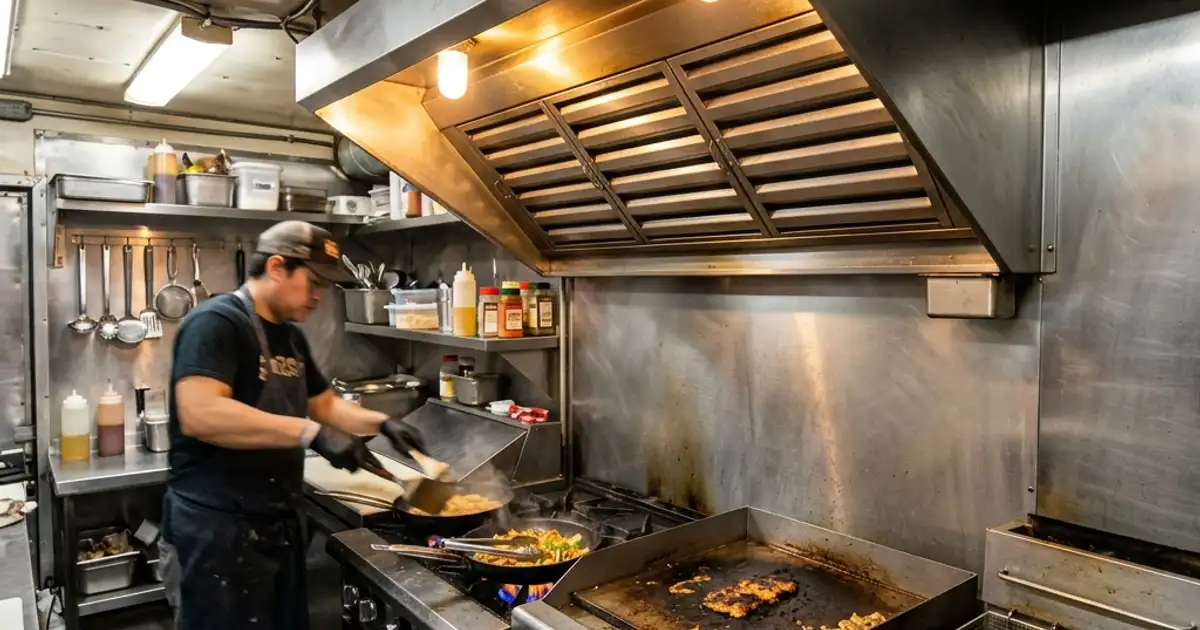
Food trucks with commercial cooking equipment that produces grease-laden vapors are subject to the same NFPA 96 hood cleaning requirements as brick-and-mortar restaurants. Despite their smaller size and mobile nature, food trucks must maintain clean exhaust systems, pass fire inspections, and keep documentation of professional cleaning services. Understanding these requirements is critical because many food truck operators incorrectly assume that NFPA 96 does not apply to mobile food operations, creating fire hazards and compliance risks that can result in permit revocation.
Does NFPA 96 Apply to Food Trucks?
Yes. NFPA 96 (Standard for Ventilation Control and Fire Protection of Commercial Cooking Operations) applies to all commercial cooking operations that produce grease-laden vapors, regardless of whether the operation is in a permanent building or a mobile unit. Section 1.1.1 of NFPA 96 states that the standard applies to "the design, installation, operation, inspection, and maintenance of all public and private cooking operations," which includes food trucks, food trailers, and mobile kitchens.
The specific equipment triggers are the same as for restaurants. If your food truck has a deep fryer, flat top grill, charbroiler, wok station, or any other cooking equipment that requires a Type I hood, your exhaust system must comply with NFPA 96, including regular professional cleaning. Food trucks that only use equipment that does not produce grease-laden vapors, such as those that only steam, boil, or use microwave ovens, may not require a Type I hood and would therefore not be subject to the cleaning requirements.
Unique Challenges for Food Truck Hood Cleaning
Food trucks present several challenges that make hood cleaning different from restaurant cleaning. The most significant challenge is access. Food truck exhaust systems are compact, with short duct runs and tight spaces that make it difficult for technicians to work. Standard hood cleaning equipment may not fit inside a food truck, and the limited interior space means technicians must work in confined conditions. Some cleaning companies specialize in mobile food units and have compact equipment designed for these spaces.
The second challenge is grease accumulation rate. Because food truck exhaust systems have shorter duct runs and smaller fan capacities, grease deposits build up faster relative to the system size than in a full restaurant. A food truck operating 5 to 6 days per week with high-heat cooking equipment like deep fryers and griddles generates substantial grease vapor that concentrates in a small exhaust system. This means food trucks often need more frequent cleaning than their cooking volume alone would suggest.
The third challenge is location. Restaurant hood cleaning happens at a fixed location where the cleaning company can set up equipment, connect to water sources, and manage waste water. Food trucks may need to be brought to the cleaning company's facility, or the company needs to visit the food truck's commissary or parking location. Water supply, waste water containment, and power for pressure washing equipment must all be arranged. Some food truck operators bring their trucks to commercial kitchen cleaning facilities that are set up to handle mobile units.
The fourth challenge is documentation and inspection. Food trucks are often inspected by multiple jurisdictions as they operate in different cities and counties. Each jurisdiction may have different inspection procedures and documentation requirements. Keeping a complete set of cleaning records in the food truck at all times ensures that you can demonstrate compliance regardless of which jurisdiction's inspector shows up. Learn more about documentation best practices in our hood cleaning documentation guide.
Cleaning Frequency for Food Trucks
NFPA 96 Table 11.4 establishes cleaning frequencies based on the type and volume of cooking. For food trucks, the applicable frequency depends on what you cook and how often. Food trucks with solid fuel cooking (wood-fired pizza, charcoal grilling) require monthly cleaning. Trucks with high-volume deep frying or charbroiling need quarterly cleaning at minimum, and many fire marshals recommend monthly cleaning for these operations. Food trucks with moderate grease production (flat top grills, sauteing) typically fall into the quarterly cleaning requirement.
It is important to note that these are minimum frequencies. If your food truck operates at a very high volume, such as daily service at multiple events with continuous cooking, you may need to clean more frequently. A good rule of thumb is to inspect the system monthly and clean whenever visible grease accumulation appears on hood surfaces or inside the duct. Our cleaning frequency guide provides detailed schedules for every kitchen type, including mobile operations.
Finding Food Truck Hood Cleaning Specialists
Not all hood cleaning companies service food trucks. The compact spaces, access challenges, and need to work at the truck's location rather than a fixed address mean that specialized knowledge and equipment are beneficial. When searching for a food truck hood cleaning provider, look for companies that explicitly mention mobile food units or food truck services on their website or listing.
Ask potential cleaning companies these questions before hiring: Do you have experience cleaning food truck exhaust systems? What equipment do you use for small, confined systems? Can you come to my commissary or parking location? Do you provide the same documentation as you would for a restaurant (certificate, photos, sticker)? Can you work on my schedule, including evening or early morning hours? Our directory of hood cleaning companies includes providers across all 50 states, and many service food trucks as well as restaurants.
Fire Suppression Systems in Food Trucks
In addition to hood cleaning, food trucks with Type I hoods are required to have a fire suppression system installed in the hood. This system, which uses wet chemical agents to automatically suppress grease fires, must be inspected semi-annually by a licensed fire protection company. The suppression system inspection is separate from hood cleaning but is often coordinated with the cleaning schedule for convenience.
Fire suppression systems in food trucks take more abuse than those in stationary kitchens because of vibration from driving, temperature fluctuations, and the general wear that comes with a mobile environment. Regular fire suppression inspection is even more critical for food trucks than for restaurants. Some hood cleaning companies also offer suppression system inspection, making it convenient to handle both services in a single appointment.
Compliance Tips for Food Truck Operators
Maintaining hood cleaning compliance as a food truck operator requires a proactive approach. Schedule cleanings in advance, ideally on a recurring calendar, so they do not get pushed aside by the demands of daily operations. Keep all cleaning certificates, invoices, and inspection records in a waterproof folder inside the food truck so they are always available for inspection. Take your own photos of the clean system after each service as a backup.
Consider joining a food truck association or commissary that offers group rates for hood cleaning and other maintenance services. Group arrangements often result in lower per-truck costs and more reliable scheduling. Finally, understand that compliance is not just about avoiding fines. A grease fire in a food truck is an immediate, total-loss scenario because the fire is inches from your fuel system, propane tanks, and the truck itself. Regular hood cleaning is the single most effective fire prevention measure you can take. Refer to our NFPA 96 compliance guide for complete compliance requirements.
Ready to find a hood cleaning company for your food truck? Search our directory to find providers in your area.
Frequently Asked Questions
Related Articles
Related Guides
Find Hood Cleaners Near You
Browse our directory of NFPA 96 compliant hood cleaning companies across all 50 states.
Browse DirectoryOwn a hood cleaning business?