7 Hood Cleaning Myths Restaurant Owners Still Believe
Commercial hood cleaning is surrounded by persistent myths that lead restaurant owners to make decisions that put their businesses at risk. From believing that annual cleaning is sufficient to assuming their insurance company will not check records, these misconceptions result in fire code violations, denied insurance claims, and preventable kitchen fires. This article debunks the seven most common hood cleaning myths with facts from NFPA 96 (National Fire Protection Association Standard for Ventilation Control and Fire Protection of Commercial Cooking Operations) and industry data.
Myth 1: I Can Clean My Kitchen Hood Myself
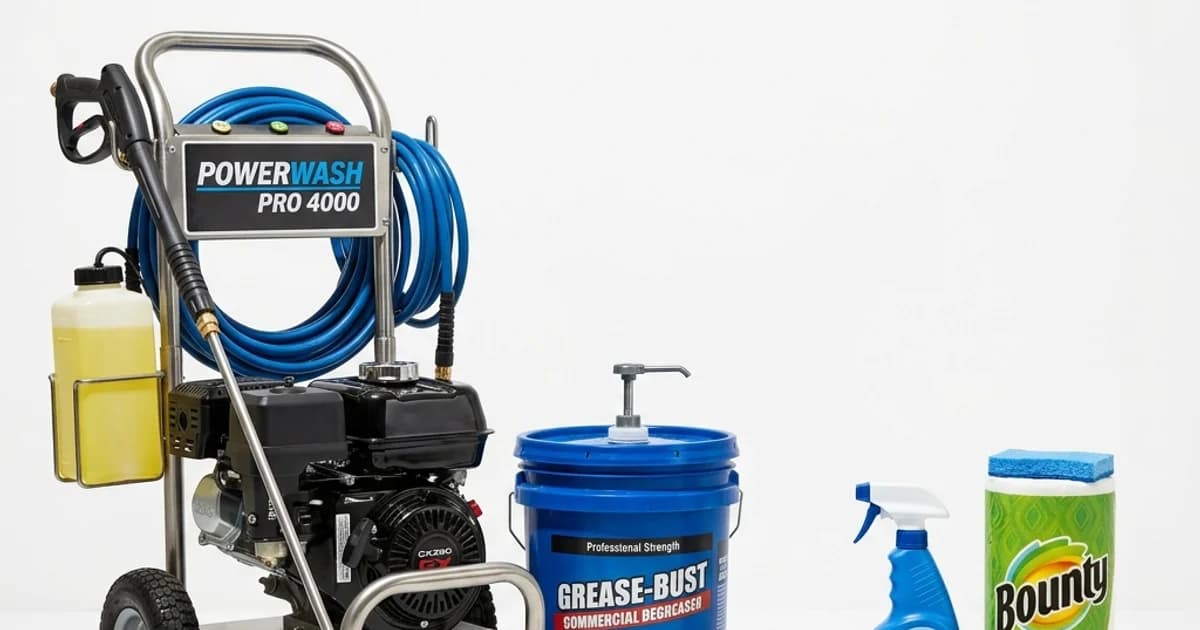
This is the most dangerous myth in the industry. While restaurant staff can and should clean hood filters and wipe down accessible surfaces between professional cleanings, the complete exhaust system requires professional equipment, commercial-grade chemicals, and trained technicians. The ductwork, exhaust fan housing, and internal components cannot be adequately cleaned without hot water pressure washers operating at 1,500 to 3,000 PSI, caustic degreasing chemicals that require specialized handling, roof access equipment for exhaust fan cleaning, and knowledge of NFPA 96 standards for acceptable cleanliness levels.
More importantly, fire codes in virtually every US jurisdiction require professional cleaning documentation from a qualified contractor. Self-cleaning records are not accepted by fire marshals or insurance companies. A restaurant owner who cleans their own hood and then has a fire will find their insurance claim denied because they cannot produce a valid cleaning certificate from a certified company. See our detailed hood cleaning vs DIY comparison for the complete breakdown of why professional service is required.
Myth 2: Once a Year Is Enough
Annual cleaning is the minimum frequency under NFPA 96, and it only applies to the lowest-volume cooking operations such as churches, day camps, and seasonal facilities that cook infrequently. The vast majority of restaurants, including full-service restaurants, fast food operations, and hotel kitchens, require quarterly cleaning at minimum. High-volume operations with solid fuel cooking, charbroiling, or wok cooking require monthly cleaning.
The specific frequency depends on the type and volume of cooking, not the size of the restaurant. A small restaurant with a charbroiler needs monthly cleaning even though the kitchen is small, because charbroiling produces extremely high volumes of grease-laden vapor. Conversely, a large commercial kitchen that only does light sauteing might qualify for semi-annual cleaning. Check your specific requirement in our NFPA 96 cleaning frequency guide, which includes a schedule for every kitchen type.
Myth 3: It Is Just the Hood That Matters
Many restaurant owners believe that cleaning the visible hood canopy is sufficient. In reality, the hood canopy is only one component of a system that extends from the cooking line to the roof. The components that accumulate the most dangerous grease deposits are often the ones you cannot see: the ductwork running between the hood and the roof, access panel areas where grease pools, the exhaust fan housing and blades on the roof, and horizontal duct sections where grease settles.
A professional hood cleaning covers the entire system, not just the visible parts. The technician cleans from the rooftop fan down through the ductwork to the hood canopy, ensuring that every surface in the exhaust path is degreased. Cleaning only the hood canopy while ignoring the ductwork and fan is like washing only the outside of a pipe while the inside remains clogged. It creates a false sense of cleanliness while leaving the most dangerous grease deposits untouched.
Myth 4: Any Cleaning Company Will Do
The hood cleaning industry has a wide range of quality, from highly trained, certified professionals to unlicensed operators with a pressure washer. The difference matters. IKECA-certified (International Kitchen Exhaust Cleaning Association) companies have completed documented training programs, use industry-standard equipment and procedures, follow NFPA 96 cleaning protocols, carry proper insurance coverage, and provide detailed documentation including before and after photographs.
Uncertified companies may cut corners by not cleaning the full duct run, skipping the rooftop fan, using inadequate equipment, or providing insufficient documentation. Some do not even carry liability insurance, which means if they cause water damage to your kitchen or a worker is injured on your premises, you could be liable. The cost difference between a certified and uncertified company is typically small, often less than $100. That savings is not worth the risk to your safety, compliance, or insurance coverage. Learn how to evaluate companies in our guide to choosing a hood cleaning company.
Myth 5: Insurance Does Not Actually Check
This myth has cost restaurant owners millions of dollars in denied fire claims. Insurance companies absolutely check hood cleaning records, particularly after a fire loss. The claims investigation for any commercial kitchen fire includes a review of maintenance records, and the absence of professional hood cleaning documentation is one of the strongest grounds for claim denial.
Many insurers now require cleaning documentation as a condition of policy issuance or renewal. Some conduct periodic property inspections that include a review of cleaning records. Even if your insurer has never asked to see your records during the normal course of your policy, a fire claim triggers an intensive investigation where every maintenance record will be scrutinized. The time to build a compliant cleaning file is now, not after a fire when it is too late. Our detailed article on how hood cleaning affects restaurant insurance covers this topic in depth.
Myth 6: Small Kitchens Do Not Need It
Kitchen size is not a factor in determining hood cleaning requirements. NFPA 96 applies to all commercial cooking operations that produce grease-laden vapors, regardless of size. A small diner with a single hood, a food truck with a compact exhaust system, and a large hotel kitchen with multiple hoods all have the same fundamental requirement: professional cleaning on a schedule determined by cooking type and volume.
Small kitchens may actually need more frequent cleaning in some cases because their exhaust systems have less capacity to handle grease accumulation. A compact duct run fills up faster than a large-diameter duct, and a small exhaust fan has less airflow margin before performance degrades. The cost of cleaning a small system is typically lower ($200 to $400 vs $400 to $800 for a large system), so the financial barrier is minimal. Food truck operators, small diners, and ghost kitchen operators all need to maintain the same cleaning standards as large restaurants.
Myth 7: Cleaning Certificates Do Not Matter
Some restaurant owners view the cleaning certificate as a formality or unnecessary paperwork. In reality, the cleaning certificate is the single most important document in your fire safety compliance file. It serves as proof of compliance with NFPA 96, which is required for fire marshal inspections, insurance policy compliance, health department requirements in many jurisdictions, and lease and franchise agreement compliance.
A valid cleaning certificate should include the date of service, the name and certification details of the cleaning company, a description of what was cleaned (hood, duct, fan), the condition of the system before and after cleaning, before and after photographs, the recommended date for the next cleaning, and the technician's name and signature. Without this documentation, you have no proof that the cleaning occurred, no matter how clean the system actually is. Fire marshals and insurance adjusters will not take your word for it. Read our documentation requirements guide for a complete checklist.
The Bottom Line
These myths persist because they offer convenient justifications for avoiding the cost and scheduling hassle of professional hood cleaning. But the risks of believing them are severe: kitchen fires that destroy restaurants and livelihoods, insurance claims denied when they are needed most, fire code violations that result in fines or closure, and health department citations that damage your reputation.
Professional hood cleaning is a routine, predictable expense that protects your restaurant, your employees, your customers, and your investment. The cost of quarterly cleaning ($1,200 to $2,400 per year for most restaurants) is a tiny fraction of what a single fire, denied claim, or forced closure would cost. Find qualified hood cleaning companies in our directory, read our IKECA certification guide to know what credentials to look for, and get your restaurant on a compliant cleaning schedule today.
Frequently Asked Questions
Related Articles
Related Guides
Find Hood Cleaners Near You
Browse our directory of NFPA 96 compliant hood cleaning companies across all 50 states.
Browse DirectoryOwn a hood cleaning business?