What Professional Hood Cleaning Looks Like: Before and After
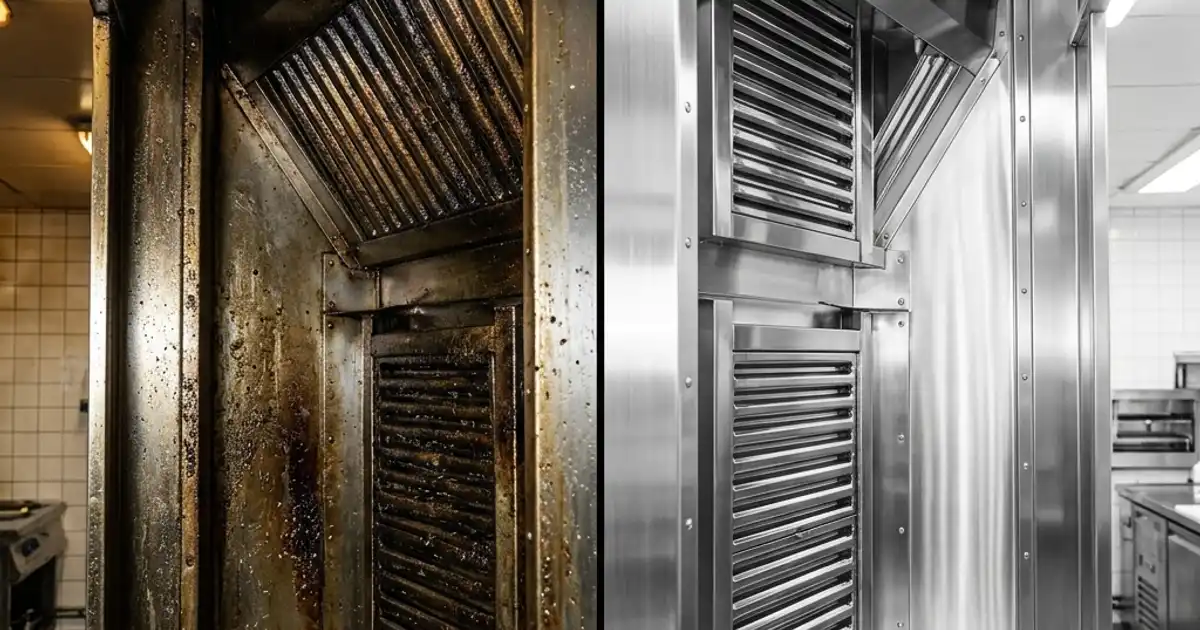
Professional hood cleaning is a comprehensive, multi-step process that removes accumulated grease from the entire kitchen exhaust system, from the hood canopy above the cooking line to the exhaust fan on the roof. The process typically takes 2 to 4 hours for a standard restaurant system and involves specialized equipment, commercial-grade chemicals, and trained technicians. Understanding what happens during a professional cleaning helps restaurant owners evaluate the quality of service they receive and verify that the work meets NFPA 96 (National Fire Protection Association) standards.
Before: What a Dirty Exhaust System Looks Like
A commercial kitchen exhaust system that is due for cleaning typically shows significant grease accumulation at multiple points. The hood canopy interior, which is the area directly above the cooking equipment, develops a thick, sticky coating of polymerized grease that ranges from dark yellow to brown-black in color. Baffle filters become clogged and heavy with grease, reducing their ability to capture airborne particles. Inside the ductwork, grease deposits can be several millimeters thick, and the exhaust fan housing and blades accumulate a dense coating that reduces airflow efficiency by 20 to 40 percent.
The most dangerous accumulation occurs in the horizontal sections of ductwork where grease pools and in the area around the exhaust fan where grease and heat combine. According to NFPA data, the ignition point for cooking grease is approximately 600 degrees Fahrenheit, and accumulated deposits inside a duct system can reach ignition temperature from a sustained flame or overheated surface below. This is why NFPA 96 compliance requires regular professional cleaning on a defined schedule.
Step 1: Pre-Cleaning Inspection and Preparation (15-30 Minutes)
A qualified hood cleaning technician begins by inspecting the entire system to assess the level of grease accumulation and identify any access issues. They check the hood canopy, remove and inspect filters, look inside accessible duct sections through access panels, and inspect the rooftop fan. This inspection determines the cleaning approach and identifies any maintenance issues that should be reported to the restaurant owner.
Preparation involves protecting the kitchen from water and chemical overspray. Technicians cover cooking equipment, countertops, and floor areas with plastic sheeting. They disconnect or cover any electrical components near the hood. Gas lines to cooking equipment are shut off, and the exhaust fan is turned off. Some technicians place absorbent materials on the floor beneath the hood to catch runoff water and grease.
Step 2: Filter Removal and Soaking (Concurrent)
Baffle filters are removed from the hood and placed in a soak tank filled with hot water and commercial degreasing solution. The filters soak throughout the cleaning process, which loosens baked-on grease so it can be pressure washed off later. Some companies bring a portable soak tank; others clean filters in the restaurant's three-compartment sink if available. Filters are a critical component of the system because they capture approximately 80 percent of grease particles before they enter the ductwork.
Step 3: Chemical Application (15-20 Minutes)
Commercial-grade degreasing chemicals are applied to the interior of the hood canopy, the duct entry points, and all accessible interior surfaces. These chemicals are significantly stronger than consumer cleaning products and are designed to break the bond between polymerized grease and metal surfaces. The chemicals need dwell time, typically 10 to 15 minutes, to penetrate and dissolve grease deposits. Technicians apply chemicals using hand sprayers or powered spraying systems depending on the size of the system.
The chemicals used by professional hood cleaners are typically caustic (high pH) solutions that saponify grease, converting it into a water-soluble substance that can be rinsed away. These chemicals require proper handling, personal protective equipment, and disposal procedures, which is one of the reasons that professional service is required rather than DIY cleaning.
Step 4: Pressure Washing and Scraping (60-120 Minutes)
This is the core of the cleaning process and takes the most time. Using hot water pressure washers that operate at 1,500 to 3,000 PSI, technicians systematically wash every interior surface of the hood, ductwork, and fan housing. The combination of hot water, high pressure, and the pre-applied degreaser removes virtually all grease deposits. Stubborn deposits in corners, seams, and around access panels may require hand scraping with plastic or metal scrapers before pressure washing.
Technicians work from the top of the system downward. They start at the rooftop fan, cleaning the fan blades, housing, and the top section of the duct. Then they work down through the duct system using access panels, and finish with the hood canopy interior. This top-down approach ensures that loosened grease and dirty water flow downward and out through the hood, rather than re-contaminating already-cleaned sections above.
Step 5: Fan and Rooftop Work (20-30 Minutes)
The exhaust fan on the roof receives special attention because it accumulates some of the heaviest grease deposits in the system. Fan blades are cleaned individually, and the fan housing is degreased and pressure washed. Technicians also check the fan belt tension, lubrication, and general condition, reporting any maintenance needs to the restaurant owner. The rooftop grease containment system, if present, is cleaned out and any grease pads or pillows are replaced.
Rooftop grease containment is an important environmental consideration. Grease runoff from exhaust fans can contaminate stormwater systems and violate local environmental regulations. A proper rooftop grease containment system captures this runoff and prevents it from reaching drains or building surfaces.
Step 6: Filter Cleaning and Reinstallation (15-20 Minutes)
After soaking throughout the cleaning process, filters are pressure washed to remove remaining grease, inspected for damage, and reinstalled in the hood. Damaged or warped filters are flagged for replacement. Filters should be bright silver in color after proper cleaning, with all mesh openings clear and unobstructed. This is one of the easiest quality checks a restaurant owner can perform after a cleaning.
Step 7: Final Inspection and Documentation (15-20 Minutes)
A thorough final inspection verifies that all surfaces are clean, all access panels are properly secured, filters are correctly installed, and the fan operates properly when turned back on. The technician removes all protective coverings, cleans any overspray from kitchen surfaces, and ensures the cooking area is ready to return to service.
Documentation is a critical part of the process. A professional cleaning company provides a cleaning certificate, before and after photographs of key areas, a sticker placed on the hood showing the date of service and the company's information, and often a recommended date for the next cleaning based on the kitchen's cooking volume. This documentation is essential for fire marshal inspections and insurance compliance.
After: What a Clean System Looks Like
After professional cleaning, the interior surfaces of the hood canopy should be bare metal with no visible grease film. Ductwork interior surfaces should be clean to bare metal. The exhaust fan blades should be shiny and free of buildup. Filters should appear new, with bright metal and clear openings. The difference between before and after is dramatic and immediately visible.
A properly cleaned system also performs better. Airflow returns to design specifications, cooking odors are more effectively captured, the kitchen runs cooler, and the risk of a grease fire drops to near zero. The system remains in this clean condition for weeks to months depending on cooking volume, at which point the cycle begins again according to your NFPA 96 cleaning schedule.
Ready to schedule a professional cleaning? Find certified hood cleaning companies in our directory, or compare companies side by side to find the best fit for your restaurant.
Frequently Asked Questions
Related Articles
Related Guides
Find Hood Cleaners Near You
Browse our directory of NFPA 96 compliant hood cleaning companies across all 50 states.
Browse DirectoryOwn a hood cleaning business?